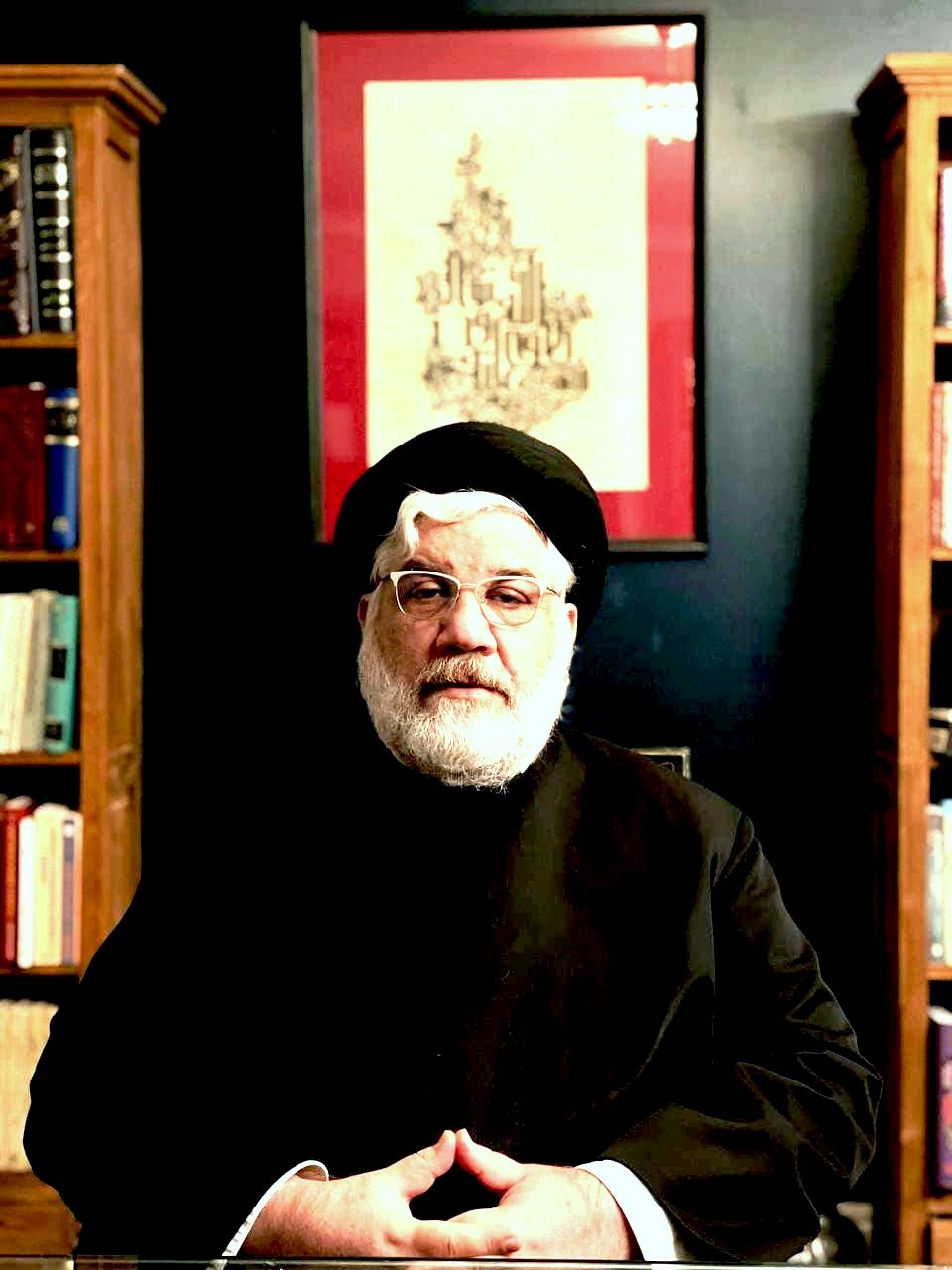
A Life Dedicated to Islamic Knowledge
Dr Seyed Salman Safavi (b. 1959, Isfahan) is an Iranian Islamicist, Neo-Sadrian philosopher, Quranic exegete, scholar of Islamic mysticism, and a leading authority in Islamic Psychology. He is widely recognised for his discovery of the structure of Rūmī's Mathnawī, as well as for his contributions to Quranic hermeneutics, Islamic philosophy, Islamic Psychology, and comparative intellectual history. He is the author of more than ninety books and over two hundred scholarly articles in the fields of Quranic exegesis, philosophy, Islamic Psychology, Sufism, and Islamic thought.
Born into a devout Twelver Shiʿi family in Isfahan, Iran, Dr Safavi traces his lineage directly to one of the most revered figures in the history of Islamic spirituality: Sheikh Safi al-din Ishaq Ardabili (1252–1334) — poet, mystic, Sufi master, and the founding spiritual father of the Safavid Ṭarīqah.
Sheikh Safi al-din Ardabili — A Legacy of Scholarship and Sanctity
Sheikh Safi al-din Ardabili was born in Ardabil in the Azerbaijan region of Iran and became one of the most distinguished Sufi masters and Islamic scholars of the 13th–14th century. A spiritual successor to the great Sufi master Shaykh Zāhid Gīlānī, he founded the Safaviyya Sufi Order — a spiritual path rooted in the Quran, Hadith, and the inner sciences of Islamic mysticism (ʿirfān). His Khanegah (spiritual lodge) in Ardabil became a renowned centre of Islamic learning, attracting scholars, mystics, and seekers from across the Islamic His shrine and ensemble in Ardabil is today recognised as a UNESCO World Heritage Site, a testament to his enduring spiritual and cultural legacy. The Safavid dynasty — which governed Iran for over two centuries and presided over one of the greatest periods of Islamic art, architecture, philosophy, and scholarship — traces its origins directly to his lineage and spiritual order.
Dr Safavi carries this noble lineage with scholarly rigour and spiritual responsibility. He pursued traditional Islamic studies in the seminaries of Isfahan, Najafābād, and Qom, studying under Ayatollah Shaykh ʿAbbās Īzādī, Ayatollah al-ʿuẓmā Ḥusayn ʿAlī Montaẓerī, Ayatollah al-ʿuẓmā ʿAbd al-Karīm Mūsawī Ardabīlī, and Ayatollah Nāṣerī.
After completing his seminary training, Dr Safavi obtained both a bachelor's and a master's degree in pure philosophy, before pursuing doctoral studies in philosophy and mysticism at the School of Oriental and African Studies (SOAS), University of London. His PhD dissertation, The Semantic Structure of Rūmī's Mathnawī, constituted a critical reassessment of approximately seven centuries of interpretive approaches to the Mathnawī and proposed a new structural theory for its interpretation. The work received commendation from Professor Simon Weightman, Professor James Morris, Professor Seyyed Hossein Nasr, and Professor William Chittick.
In 2000, Dr Safavi was elected a Fellow of the University of London and founded the course in Shiʿi Studies within the Department of Philosophy and Religious Studies at SOAS. He is the recipient of the Islamic Republic of Iran's World Book of the Year Award (2008) for his English-language work The Semantic Structure of the Mathnawī. Since relocating to London in 1996, he served as Deputy Director for Research and Education at the Islamic Centre of England, and co-founded — in collaboration with Ayatollah Seyyed Mohammad Khamenei and Ayatollah Mohsen Araki — the peer-reviewed journal Transcendent Philosophy, of which he has served as Chief Editor since its inception in 2000.
Academic Credentials
Areas of Expertise
Dr Safavi's scholarship spans four interconnected disciplines that form the core of the SIA curriculum. His expertise in Quranic Tafsir is grounded in his original theory of Semantic Structuralism, which reveals the precise internal architecture of each Quranic surah through chiasmus, parallelism, and isotopy. His work in Islamic Philosophy centres on Philosophy of Religion and Rumi's Mathnawi, extending classical Islamic thought into contemporary domains including aesthetics, political philosophy, philosophy of language, and philosophy of Islamic art. His approach to Islamic Psychology is rooted in the Quranic doctrine of the hierarchy of the self (marātib al-nafs) and offers a sustained critique of secular Western psychology as metaphysically inadequate. His teaching of Islamic Mysticism draws on the living Safavid Tarīqah, the wisdom of Rumi's Mathnawī, and the philosophy of Mullā Ṣadrā — offering a comprehensive path of spiritual transformation grounded in divine unity (tawhīd).
Selected Publications
- 2018 The Practice of Sufism and the Safavid Order — LAIS Press
- 2018 Mulla Sadra: Life and Philosophy — LAIS Press
- 2018 Rumi's Principles — Islamic Mysticism Studies
- 2020 Divine Invocation (Dhikr) — The Safavid Order
- 2003 Mulla Sadra & Comparative Philosophy on Causation
- 2008 The Semantic Structure of the Mathnawi — World Book of the Year Award